How to Practice (Without Disturbing Your Neighbors)
Jan 27, 2026
by Antoinette Ady
Myth Debunking
Many students don’t get in as much practice time as they should because they are scared to make noise in their apartment. Whether it’s a grumpy neighbor, thin walls, or just feel self-conscious, let’s cover the facts.
1. “Violin is so loud!”
It’s not as loud as you think. Have you ever heard a trumpet? Or a saxophone, or a tuba or ANY wind instrument? Those are loud. How about an electric guitar turned up to 11? Drums? Now those are loud! To say nothing of the one thing we’ve all debated calling in reporting to the police: that darn bass.
2. “My neighbors can hear everything I play.”
Actually, they probably can’t. The reason why is because of physics. High pitched sounds are dampened very well by walls. The more walls that are between your violin and your neighbor, the less likely they are hear you.
Professionally soundproofed rooms are a “room within a room”. Something you may already be instituting by virtue of not playing your violin in your neighbor’s living room.
Walls are very good at dampening high-pitched sounds, and poor at dampening low-pitched sounds. The reason why you can hear your upstairs neighbor’s bass thumping, or the bass blasting from the inconsiderate car down the street, is that the low frequency of the bass is physically traveling via conduct with physical surfaces. Low frequencies travel farther than high frequencies.
Consider the difference in the sound of traffic from inside and outside a car. The physical materials of the car are shielding you from the tremendous amount of noise outside.
3. “I’m going to get kicked out of my apartment for making noise.”
I have been teaching violin for 15 years, and I have yet to see this happen. As a musician, you have rights. Your lease usually states the quiet hours of the building. And more importantly, once you implement one of the solutions below, ask yourself, “Is this even louder than my TV?”
Solutions
Soundproofing
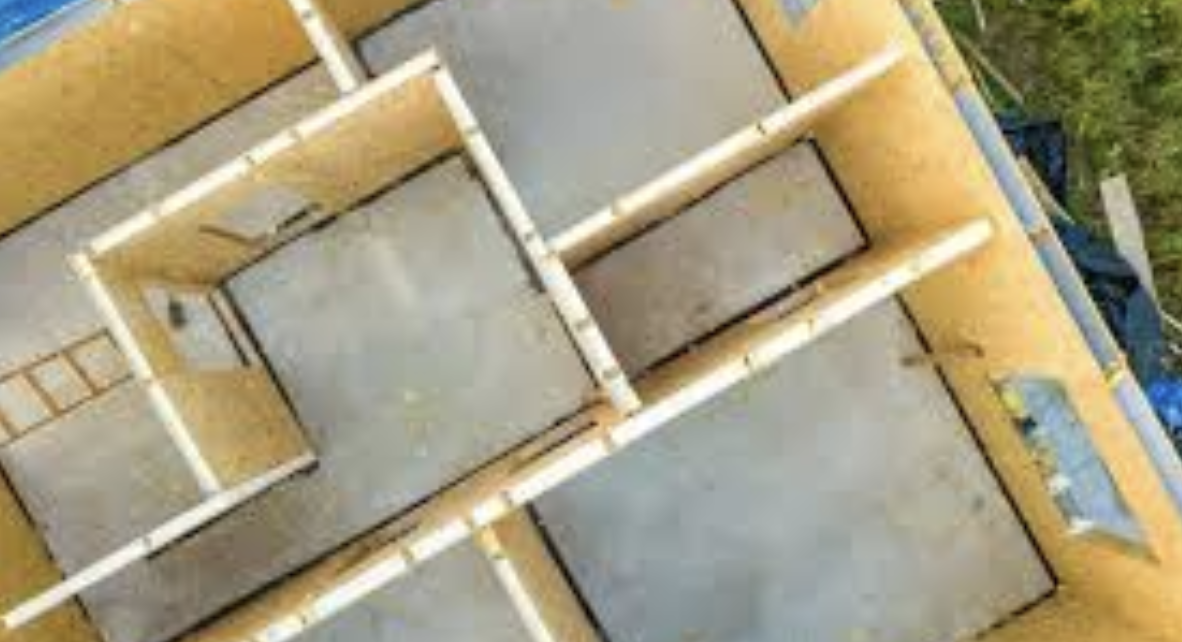
The more walls you can put between you and the listener, the quieter you will be to them, assuming all doors are closed along the way. If light can travel through, so can sound. So the gaps under and around your door? If you can
see light traveling through, your sound is going right through as well. The solution is simple, and cheap. Hit up your local hardware store, grab a few weather stripping supplies and stop up the gaps. You will have significantly changed the level of sound escaping your practice room.
The more walls you can put between you and the listener, the quieter you will be to them, assuming all doors are closed along the way. If light can travel through, so can sound. So the gaps under and around your door? If you can see light traveling through, your sound is going right through as well. The solution is simple, and cheap. Hit up your local hardware store, grab a few weather stripping supplies and stop up the gaps. You will have significantly changed the level of sound escaping your practice room.
Certain materials absorb sound better than others. Generally speaking, the denser the material, the better is at absorbing sound traveling through the air. This is why old school rock bands would lean a mattress against the wall for quick and easy soundproofing. You can easily achieve this same effect by considering how much mass you can put between you and the listener. Not sure where to put that big bookcase? How about against the wall between you and your roommate? Thicken up that wall with heavy mass, and it’s like building an extra, partial wall, in terms of sound dampening. Your goal is to have the vibration be absorbed by material instead of your walls which you share in common.
Certain materials absorb sound better than others. The denser the material, the better is at absorbing sound. This is why old school rock bands would pad the walls with mattresses. You can easily achieve this same effect by considering how much mass you can put between you and the listener. Not sure where to put that big bookcase? How about against the wall between you and your roommate? Thicken up that wall with heavy mass, and it’s like building an extra, partial wall, in terms of sound dampening. Your goal is to have the vibration be absorbed by material instead of your walls which you share in common.
Sound Dampening
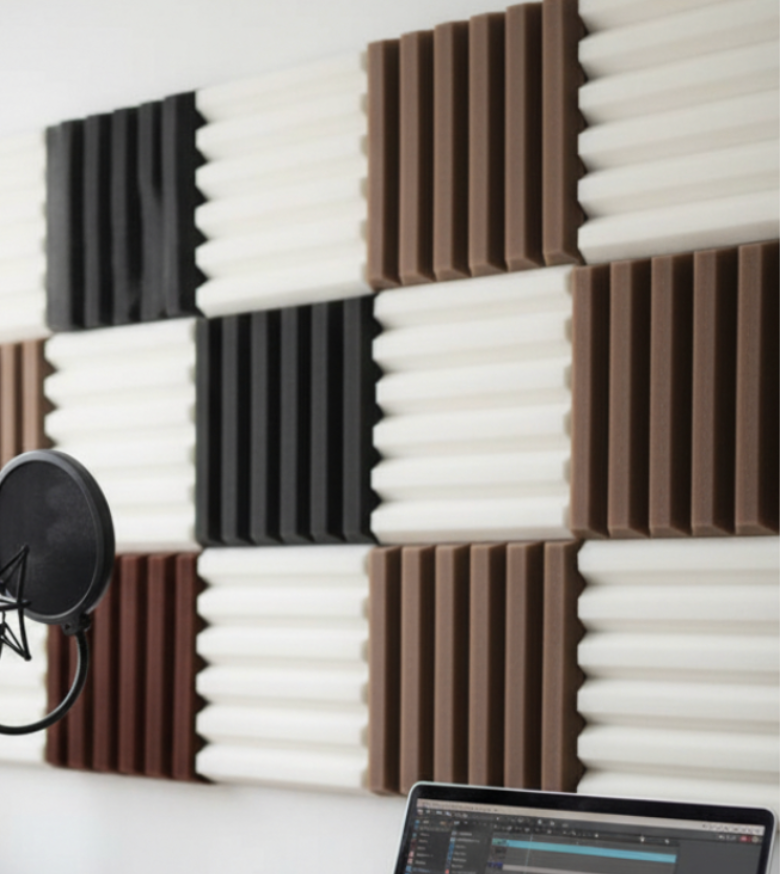
If you can’t add mass, you can at least reduce the sound waves bouncing around the room, which will reduce the overall volume. Hard, smooth surfaces reflect sound (e.g. glass, mirrors, marble). Textured surfaces refract sound and soft surfaces absorb sound. This is why it’s so fun to sing in the bathroom (with all of that reverberation), and why the quietest room in the world has foot long foam triangles attached at every angle to the wall to absorb and refract every bit of sound.
Mutes
The quickest, easiest fix is to use a mute. A mute is a device that temporarily attaches to the bridge of your instrument to dampen the vibration, which ultimately reduces the volume output. They come in various shapes and sizes, but these are the most popular.
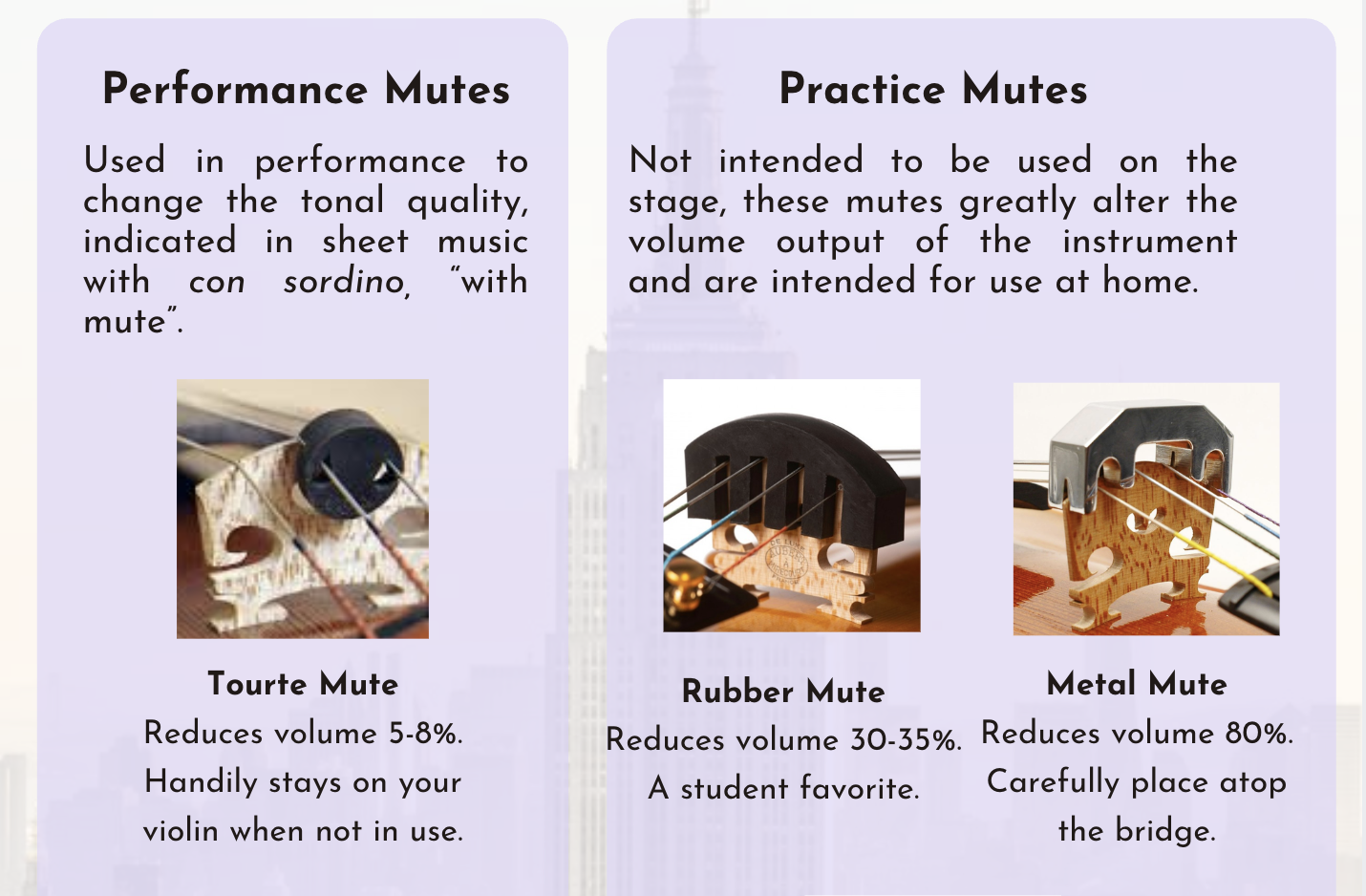
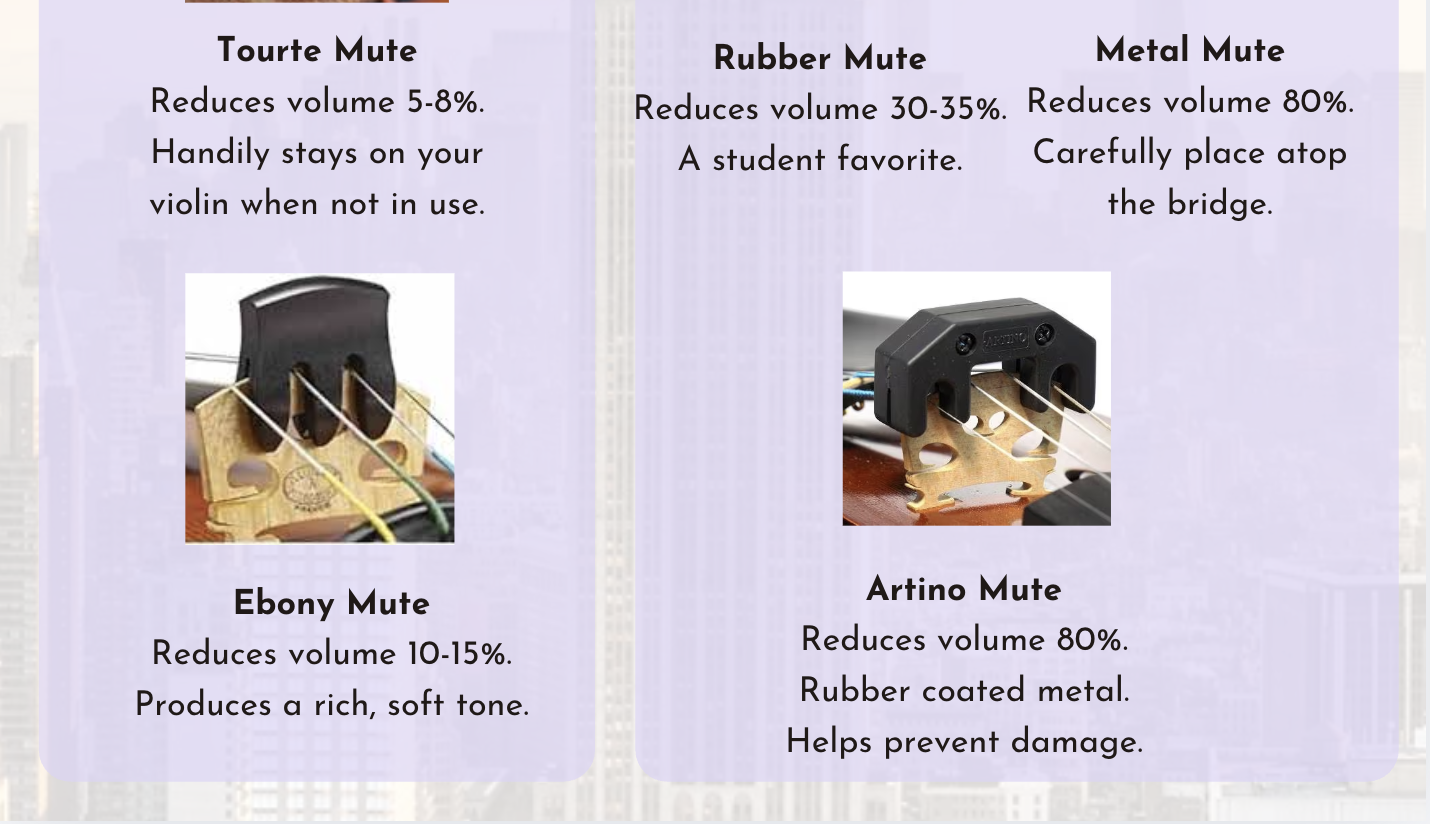
One word of caution regarding mutes. Mutes dampen every sound on the violin, which includes not only your sound but your mistakes as well. You want to be able to practice your bowing technique in a realistic environment. Therefore I recommend students play at least 40% of the time without a mute, so their ear can remain sensitive to the violin’s normal output. If you practice with a mute 100% of the time, when you do play with a mute, you’ll suddenly feel very sensitive to the violin’s normal volume and will treat it more tentatively than you should. This will affect your technique in a negative way.
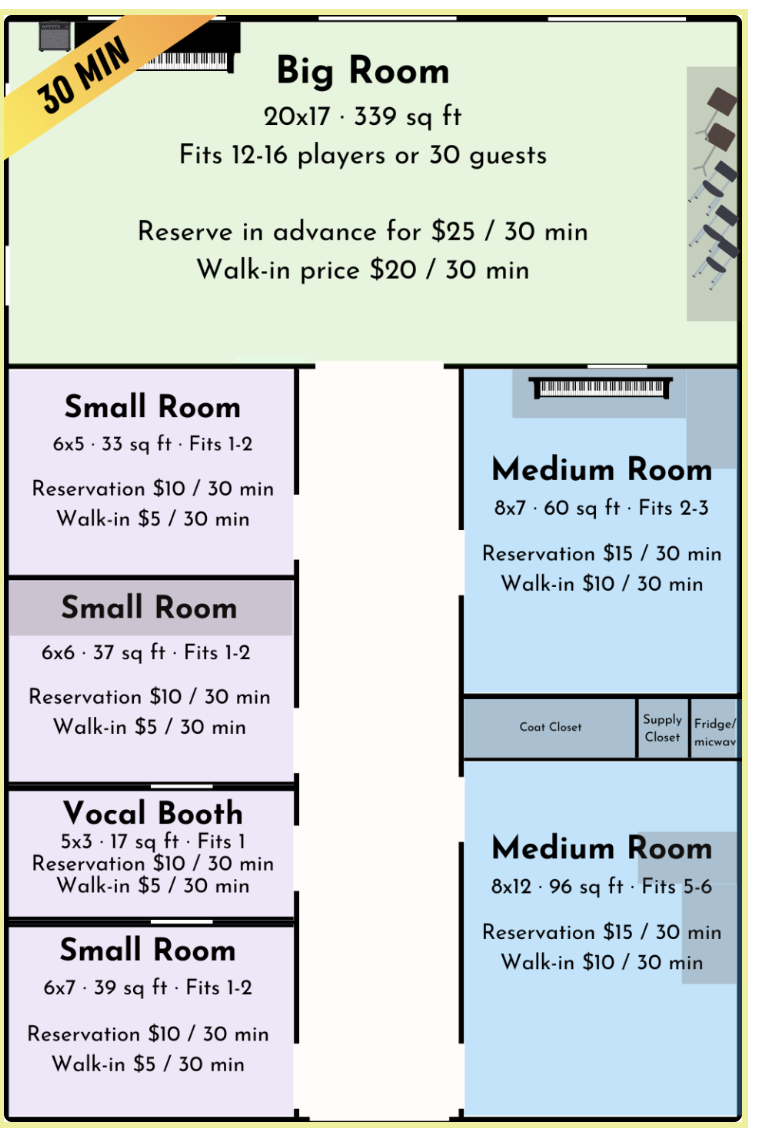
Rent a Practice Room at NYC Violin Studio
Did you know we rent out practice rooms? That’s right! Before or after your class, or whenever is convenient for you, you can book a practice room right in the studio. We even have same day discounts!
Reserve a Practice Room right here with just a few clicks: www.nycviolinstudio.com/practice-rooms
Or, you can look for a rehearsal space near you. Many rehearsal spaces rent hourly or monthly. Search for “rehearsal studio” on Google maps. Most studios require a phone call to book.